

British Hop Varieties
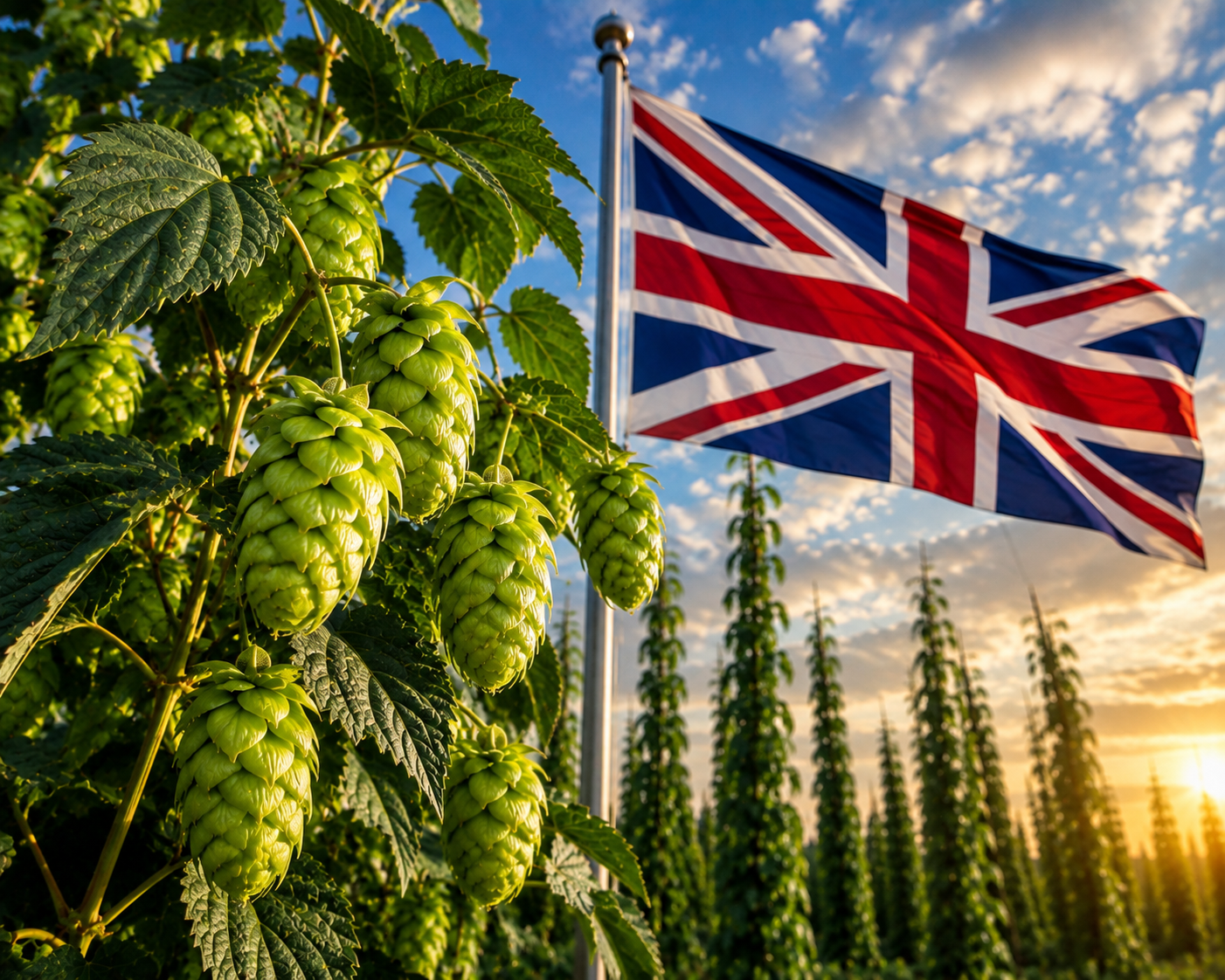
English Hop Varieties: Characteristics, Aromas, Brewing and the New Generation of British Hops
When discussing English hops, most brewers immediately think of the classic varieties that defined traditional British brewing: East Kent Goldings, Fuggle, Challenger, Target and First Gold. These hops are associated with Bitter, Best Bitter, Mild, English Pale Ale, Porter, Stout and traditional IPA.
English hops, however, are no longer limited to earthy, herbal and spicy profiles.
Over the last decades, British hop breeding has produced a much wider range of varieties, including cultivars with grapefruit, tropical fruit, passionfruit, mango, peach, blackcurrant, citrus and even wine-like characteristics. The modern British hop portfolio now combines traditional English character with aromas that can compete with New World varieties.
The British Hop Association currently lists more than 30 commercially grown British aroma varieties. British breeding programmes have also placed particular emphasis on disease resistance, agricultural efficiency and adaptation to changing growing conditions. Wye Hops and private breeding programmes such as the Charles Faram Hop Development Programme have played an important role in this evolution.
From Traditional English Hops to Modern British Cultivars
British hops can broadly be divided into four groups:
- Traditional and heritage varieties, such as East Kent Goldings, Goldings, Fuggle, Bramling Cross and Sussex.
- Classic English brewing varieties, such as Challenger, Northdown, Progress, Pioneer, Target and First Gold.
- Modern British aroma varieties, such as Endeavour, Ernest, Archer, Godiva, Minstrel and Boadicea.
- New World-style British varieties, such as Jester, Olicana, Harlequin and Mystic.
The boundaries between these groups are not rigid. Several traditional English varieties can provide substantial bitterness, while some modern aroma cultivars can be used for both bittering and late hopping.
As with hops from every growing region, the analytical characteristics of an individual lot can vary considerably according to crop year, growing conditions, harvest date, drying, storage and processing. The values given for alpha acids and oils should therefore be considered typical ranges rather than fixed specifications.
One of the most interesting characteristics of British hops is their maritime terroir. British Hop Association describes the country's mild climate and generally even rainfall as contributing to relatively low myrcene levels compared with many other hop-growing regions. This is associated with the delicate and complex character traditionally found in British hops.
Traditional English Hop Varieties
East Kent Goldings
East Kent Goldings is one of the quintessential English hop varieties. It is traditionally associated with Kent and belongs to the wider Goldings family.
Its aroma is typically floral, slightly spicy, earthy and honey-like. Compared with modern high-impact varieties, its intensity is moderate, but its great strength lies in balance and integration with malt and yeast character.
Goldings works exceptionally well in traditional Bitter, Best Bitter, English Pale Ale, Mild, Porter and Stout. It can be used for bittering, but its most characteristic contribution appears in late-boil and post-boil additions.
Typical Goldings alpha acid values range approximately from 4 to 9.5%, while total oil is relatively low, generally around 0.4 to 0.8 ml per 100 grams.
The hop's gentle character also makes it particularly effective when combined with Fuggle.
Fuggle
Fuggle is one of the historic pillars of English brewing. It has been associated with British ale production for well over a century and remains one of the most recognisable traditional English hop profiles.
Its aroma is earthy, floral, herbal and slightly minty, with a soft and rustic character.
Fuggle is particularly appropriate for Bitter, Mild, Porter, Stout and traditional English Pale Ale. It is generally used in kettle additions and late hopping rather than aggressive dry hopping.
Its relatively low alpha acid concentration makes it less efficient as a bittering hop than modern high-alpha varieties, but this is not its principal purpose.
The real value of Fuggle is the way it contributes complexity without overwhelming the beer.
Typical alpha acid values are around 3.5 to 6.5%.
Goldings
Goldings represents a family of closely related traditional English hops rather than a single uniform genetic identity. Historically, several Goldings selections and clones were grown in different parts of Kent and harvested at different times.
The classic profile combines floral, spicy, earthy and honey-like aromas.
Goldings produces a sweet, smooth and rounded bitterness and is particularly effective in traditional English ales. It can be used throughout the brewing process, although late additions reveal its characteristic floral and spicy aroma more clearly.
Typical alpha acid values range from approximately 4 to 9.5%, with total oils around 0.4 to 0.8 ml per 100 grams.
Bramling Cross
Bramling Cross is a particularly distinctive English variety.
Its aroma combines blackcurrant, spicy notes and lemon-like citrus. Compared with Goldings or Fuggle, it can appear considerably more expressive while still retaining a recognisably British character.
It is suitable for Bitter, Pale Ale, Porter, Stout and darker English beers, where its blackcurrant character can interact particularly well with caramel and roasted malt.
Bramling Cross is also interesting in modern interpretations of traditional British ale, especially when used in late additions.
Typical alpha acid values are approximately 6 to 8%.
Sussex
Sussex is a traditional English hop with a gentle profile centred on earthy, grassy and minty notes.
It is particularly appropriate for traditional English ale styles where hop character should remain integrated with malt and fermentation flavours rather than becoming dominant.
Its relatively delicate profile makes it interesting for Mild, Bitter and traditional Pale Ale.
Classic English Aroma and Dual-Purpose Varieties
Challenger
Challenger is one of the most versatile traditional-modern British varieties.
Its profile combines spice, cedar, green tea and floral notes. It can provide both bitterness and aroma, making it useful in a wide range of English beer styles.
Challenger is particularly suitable for Bitter, Best Bitter, English Pale Ale, Porter, Stout and traditional IPA.
Its bitterness is firm but generally more rounded than that of many modern high-alpha varieties.
Typical alpha acid values are around 6.5 to 9%.
Northdown
Northdown combines spicy, floral and pine-like aromas.
It can be used both as a bittering hop and for later additions, particularly in traditional British ales and stronger English beers.
Its relatively assertive character makes it useful when a brewer wants more hop presence than traditional Goldings or Fuggle can provide.
Typical alpha acid values are approximately 7 to 10%.
Progress
Progress is a classic English variety with a sweet, floral and slightly minty character.
It is particularly suitable for Bitter, Mild and traditional Pale Ale.
Its aroma is gentle and rounded, making it useful when the brewer wants to reinforce the traditional English profile without introducing aggressive citrus or tropical notes.
Typical alpha acid values are approximately 6 to 7.5%.
Pioneer
Pioneer is characterised by cedar, grapefruit and herbal notes.
It is more expressive than traditional Goldings while still retaining a distinctly British aromatic identity.
It works well in Pale Ale, Bitter, IPA and modern interpretations of traditional English beer.
Typical alpha acid values range around 8 to 10.5%.
Target
Target was released by Wye College in 1972 and became one of the most important English varieties for both bittering and aroma.
Its aroma is intense and characterised by sage, citrus and spicy notes.
Target produces a sharp, assertive bitterness and can be used effectively at the beginning of the boil. Late additions and dry hopping can reveal its more aromatic character.
It is particularly suitable for Bitter, IPA, English Pale Ale, Porter and stronger ales.
Typical alpha acid values range from approximately 8.5 to 13.5%, with total oil around 1.2 to 1.8 ml per 100 grams.
First Gold
First Gold is one of the most successful modern English varieties derived from the Goldings tradition.
It combines sweet orange and tangerine aromas with marmalade, floral and spicy notes.
Its character makes it extremely versatile. It works particularly well in Bitter, Pale Ale, Golden Ale, IPA and modern interpretations of traditional English beer.
First Gold was released in 1996 and was developed as a hedgerow hop, combining WGV Goldings genetics with a hedgerow male. It is wilt tolerant and has useful resistance to several powdery mildew strains.
Typical alpha acid values are approximately 6.5 to 10%, while total oil can range from 0.7 to 1.7 ml per 100 grams. It is also available as an organically grown hop.
Modern British Hop Varieties
Endeavour
Endeavour is one of the most interesting modern British varieties.
Its profile combines blackcurrant, citrus and spicy notes, giving it a character that sits between traditional English hops and modern New World aroma varieties.
It was selected through the Wye breeding programme and has shown strong results in brewing trials.
Endeavour works particularly well in Pale Ale, IPA, Bitter and modern English ales.
Its ability to combine fruit character with recognisably British herbal and spicy notes makes it particularly interesting for brewers looking for a bridge between traditional and modern styles.
Typical alpha acid values are approximately 8 to 10.5%.
Ernest
Ernest is a particularly interesting example of the revival of older British genetic material.
It originates from a Wye College genotype dating from the 1950s and was selected for its combination of strong wilt resistance and complex New World-style aromas.
Its aroma can include apricot, citrus and spice, giving it a modern character while retaining an English foundation.
Ernest is suitable for Pale Ale, IPA, modern Bitter and hop-forward English beers.
Typical alpha acid values are approximately 5.3 to 6.3%.
The variety illustrates one of the most important directions of British breeding: combining valuable historic genetics with modern disease resistance and contemporary aroma profiles.
Archer®
Archer® is a newer British variety developed through the Charles Faram Hop Development Programme.
It combines floral aromas with delicate lime and peach.
One of its particularly interesting characteristics is its agricultural performance. Archer® is a low-trellis, wilt-resistant variety with tolerance to powdery mildew.
Its aroma is more delicate than Jester or Olicana, making it suitable when a brewer wants a modern citrus and fruit accent without abandoning the restrained character of British ale.
It can be used both in copper additions and dry hopping.
Typical alpha acid values are approximately 4 to 6%, with total oil around 0.6 to 0.8 ml per 100 grams.
Godiva™
Godiva™ is a modern British aroma variety with a distinctive combination of spice, gooseberry and tangerine.
It represents an interesting middle ground between classic English character and contemporary fruit-driven aromas.
Godiva™ can be used in Pale Ale, IPA, Golden Ale and modern British lager or ale styles.
Typical alpha acid values are around 6 to 9%.
Minstrel®
Minstrel® is another modern British cultivar combining spicy, berry and orange-citrus characteristics.
Its flavour profile is more expressive than many traditional English varieties, while retaining enough herbal and spicy character to remain recognisably British.
It can be used in Pale Ale, Bitter, IPA and modern English beers.
Typical alpha acid values are approximately 5 to 7%.
The New World Side of British Hops
Jester®
Jester® is one of the most important modern British varieties for brewers looking for intense fruit character.
It was developed through the Charles Faram Hop Development Programme and was specifically selected to bring New World-style flavours into British hop production.
Its aroma is dominated by grapefruit and tropical fruit.
Unlike many traditional English hops, Jester® can deliver a punchy aroma of genuinely high intensity. It can therefore be used successfully in modern Pale Ale, IPA, Session IPA and hop-forward English beers.
It can also provide complex bitterness with fruity and herbal components.
Typical alpha acid values are around 7 to 9%, with total oil approximately 0.6 to 1.2 ml per 100 grams.
Olicana®
Olicana® is one of the most expressive British aroma varieties.
Its profile is dominated by mango, grapefruit and passionfruit, placing it firmly in the modern hop category.
Despite these New World-style aromas, Olicana® remains a British-grown variety and can produce a distinctive combination of tropical fruit and the more complex background character associated with British terroir.
It is particularly suited to Pale Ale, IPA, Session IPA, NEIPA-inspired beers and modern British ales.
Typical alpha acid values range from approximately 6 to 9%.
Harlequin®
Harlequin® is another highly expressive British variety.
Its flavour profile includes passionfruit, peach and pineapple, giving it an intensely fruity character.
With alpha acid values generally around 9.5 to 12%, Harlequin® can contribute both bitterness and substantial aroma.
It is particularly suitable for modern Pale Ale, IPA, Session IPA and hop-forward beers.
Compared with traditional English hops, its flavour intensity is considerably higher, making it an excellent choice when a brewer wants a distinctly modern British beer.
Mystic™
Mystic™ combines blackcurrant, citrus and passionfruit.
It is an interesting variety for brewers looking for a British hop with modern fruit character but a darker and more complex aromatic direction than purely tropical cultivars.
It can work particularly well in Pale Ale, IPA, modern English ale and experimental beer styles.
Typical alpha acid values are approximately 4 to 6.5%.
English High-Alpha and Bittering Varieties
Admiral
Admiral is one of the strongest British bittering varieties, with alpha acids commonly around 13 to 16%.
Its profile is characterised by resinous, orange and citrus notes.
This makes Admiral particularly interesting because it can provide substantial bitterness while still contributing a noticeable aromatic character.
It is suitable for IPA, Strong Ale, English Pale Ale and high-gravity beers where efficient bittering is important.
Pilgrim
Pilgrim is a British dual-purpose variety with spicy, citrus and pear-like characteristics.
Its alpha acid content generally falls around 9 to 13%, making it suitable for efficient bittering as well as late additions.
It can be used in Bitter, Pale Ale, IPA, Golden Ale and modern English beers.
Its combination of spice and fruit makes it particularly versatile.
Phoenix
Phoenix is a distinctive British variety with an unusual profile combining molasses, chocolate and spicy notes.
It is particularly interesting in darker beers.
Porter, Stout, Brown Ale and strong English ales can benefit from its darker aromatic character.
Typical alpha acid values are approximately 8 to 12%.
Flyer
Flyer is a relatively high-alpha British variety with alpha acids ranging approximately from 8.3 to 14.5%.
Its aroma includes spice, citrus, liquorice and resinous notes.
This makes it particularly useful for stronger English ales and modern beers where a more assertive hop contribution is required.
British Hops and Terroir
British hop character is strongly influenced by the maritime environment in which the crop is grown.
The main commercial growing regions are concentrated in the South East of England, including Kent, Sussex and Surrey, while significant production also takes place in Herefordshire and Worcestershire in the West Midlands.
Today approximately half of British production is located in the West Midlands and half in the South East.
The British Hop Association emphasises the combination of mild maritime conditions, relatively even rainfall and generally limited irrigation.
One of the consequences is the relatively low myrcene content traditionally associated with British hops. Rather than producing the explosive aromatic impact often found in some American varieties, British hops can create layered, delicate and complex aromas.
This characteristic is particularly valuable in session beers, where drinkability and balance are as important as aromatic intensity.
British flavour can therefore be understood not simply as “less intense” than New World hops, but as a different aromatic architecture.
Disease Resistance and Sustainable Hop Breeding
Modern British hop breeding has an important objective beyond flavour.
The British breeding programme has placed strong emphasis on disease resistance, particularly resistance to wilt, aphids and powdery mildew.
Boadicea, for example, was granted plant variety rights in 2008 and was described by the British Hop Association as the world's first aphid-resistant hop variety.
The breeding programme also works on improving agricultural performance, reducing vulnerability to disease and adapting plants to changing environmental conditions.
The development of modern varieties is extremely slow. A complete breeding cycle can require around 10 to 12 years from initial crossing to commercial production.
The process includes controlled crosses, seedling selection, resin and aroma analysis, field trials, disease evaluation, yield assessment, brewing trials and eventually commercial planting.
This long development period explains why apparently “new” hop varieties often represent more than a simple search for a different aroma. They are the result of years of selection for flavour, yield, disease resistance, harvesting characteristics and environmental adaptation.
Importing English Hops into Europe
For European brewers, English hops have an additional point of interest: they are now imported from the United Kingdom into the European Union under the post-Brexit trading framework.
This makes British hops particularly interesting for specialist European hop merchants and breweries looking for authentic English varieties rather than substitutes grown elsewhere.
The British Hop Association itself highlights the importance of British growers developing competitive varieties capable of competing with imported hops, since a substantial proportion of the hops used by breweries are imported.
For European buyers, however, the choice should not be based only on the variety name.
Crop year, harvest conditions, drying, pelletisation, packaging, oxygen exposure, cold storage and transport conditions can have a significant impact on the final brewing performance.
This is especially important for highly aromatic varieties such as Jester®, Olicana®, Harlequin® and Mystic™, where freshness can strongly influence the expression of fruit and citrus compounds.
For traditional varieties such as Goldings and Fuggle, storage quality is equally important, although their intended brewing character is generally less dependent on extreme hop-oil intensity.
Choosing the Right English Hop Variety
For a traditional English Bitter, East Kent Goldings, Goldings, Fuggle, Progress, Challenger and Bramling Cross remain among the most characteristic choices.
For a more aromatic modern English ale, First Gold, Target, Pioneer, Endeavour, Ernest and Archer® offer greater intensity while retaining a recognisably British profile.
For fruit-driven British beers, Jester®, Olicana®, Harlequin® and Mystic™ are particularly interesting.
For citrus and orange character, First Gold, Admiral, Archer® and Godiva™ are strong candidates.
For tropical fruit, Olicana®, Jester®, Harlequin® and Mystic™ offer some of the most expressive British profiles.
For darker beers, Fuggle, Goldings, Challenger and Phoenix can work particularly well, depending on the desired interaction with roasted and caramel malts.
For efficient bittering, Admiral, Target, Pilgrim, Challenger and other higher-alpha varieties can reduce the quantity of hop material required compared with traditional low-alpha cultivars.
The final choice should nevertheless never be based solely on the variety name.
The actual alpha acid concentration, total oil level, crop year, storage history and sensory characteristics of the individual lot remain essential.
Two lots of the same British hop can produce noticeably different results, particularly when used in whirlpool or dry hopping.
Small-scale brewing trials and sensory evaluation of the actual lot are therefore valuable before introducing a new variety into a production recipe.
Tradition and Innovation
English hops are no longer defined only by earthy, herbal and floral aromas.
The modern British portfolio covers an extraordinary sensory range: honey, spice, mint, marmalade, blackcurrant, grapefruit, citrus, peach, apricot, mango, passionfruit and tropical fruit.
The most interesting development is not simply the attempt to imitate American or New Zealand hops.
British breeding is creating something more distinctive: modern fruit-forward varieties that retain the agricultural advantages and terroir of British hop production.
Jester®, Olicana®, Harlequin® and Mystic™ demonstrate how far British hop breeding has moved toward high-impact contemporary aroma.
At the same time, varieties such as Archer®, Endeavour, Ernest, Godiva™ and Minstrel® show another direction: combining modern brewing characteristics with traditional British complexity.
The future of English hops will therefore probably not be a choice between tradition and innovation.
Instead, the strongest British varieties will combine both.
Historic cultivars such as Goldings and Fuggle will continue to define the identity of traditional English beer, while new varieties will allow British growers to compete directly in the modern international aroma-hop market.
The challenge will be to preserve the characteristics that make British hops distinctive while developing plants capable of delivering stable yields, disease resistance, environmental resilience and commercially attractive aromas.
For brewers, this creates an increasingly interesting choice.
English hops can now provide everything from the soft honeyed elegance of Goldings to the intense tropical character of Olicana® and Harlequin®.
The British hop tradition is therefore not disappearing.
It is evolving.

Enrico Mollica
Aeronautical engineer and manager of a team specialized in numerical simulations in the automotive field. Consultant for breweries on hopping techniques and author for the Giornale della Birra. After years studying the aromatic qualities of hops, in 2023 he created the algorithm behind the HOP CONTROL software.
The tool for complete hop control is here.
Join brewers using data — not guesswork — to design their aroma.